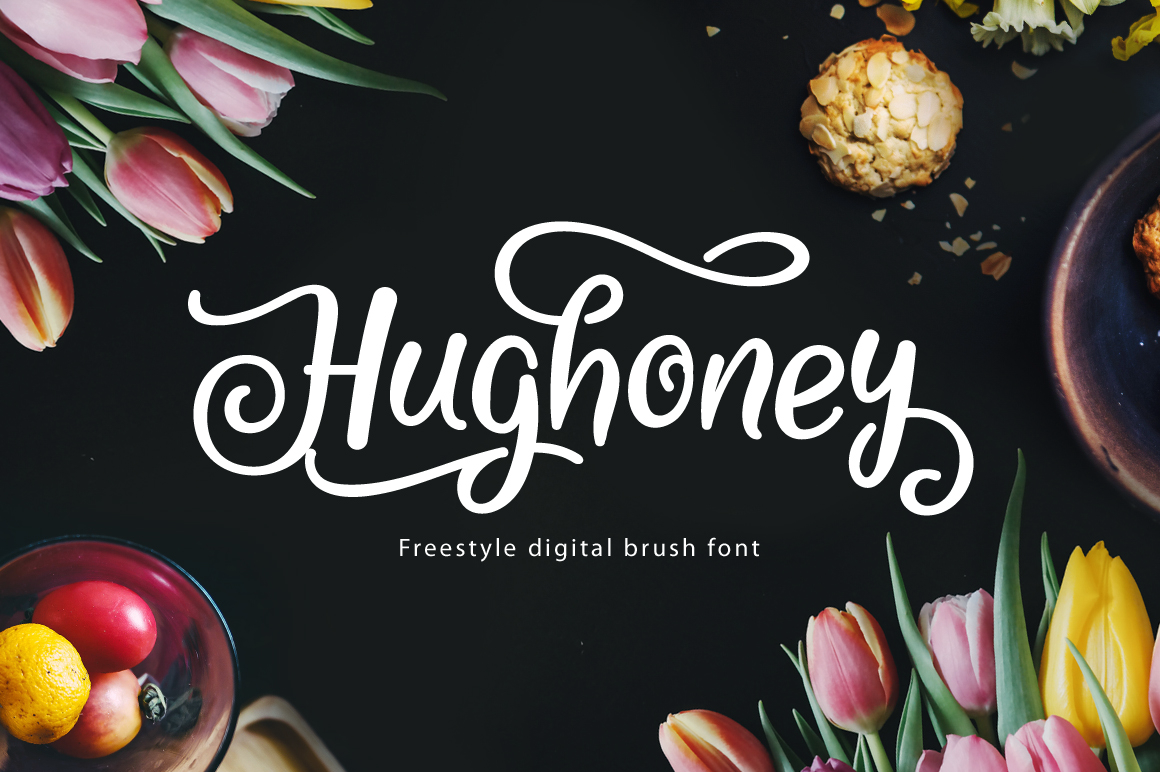
Hughoney: A Script Handwritten Font for Creative Branding
There’s a certain kind of moment in design work where you open a blank brand board and feel the weight of a project. That’s when I first tested Hughoney on a boutique identity project, and it immediately felt like the right choice. As a script handwritten font, Hughoney brings a sense of elegance and fluidity that can elevate even the most straightforward branding concepts. It’s not just another font—it’s a tool that adds character, personality, and a touch of artistry to your creative projects.
Hughoney for Boutique Branding and Logo Design
When working on a boutique logo concept, I needed something that would convey both creativity and reliability. Hughoney, with its graceful brush strokes and subtle randomization, provided exactly that. The font’s natural flow made it ideal for a handcrafted look, which aligned perfectly with the boutique’s aesthetic. I used it as the primary typeface for the logo, and the result was a clean yet expressive mark that felt authentic and memorable.
What stood out about Hughoney is how it balances elegance with approachability. Unlike some overly ornate script fonts, it maintains readability without sacrificing style. This makes it a great option for logos that need to be both visually striking and legible at smaller sizes. Whether you’re designing a minimalist logo or a more elaborate one, Hughoney offers versatility that’s hard to match.
Hughoney on Packaging Mockups and Product Labels
Later in the same project, I used Hughoney on packaging mockups and product labels. It worked beautifully with the boutique’s handmade aesthetic. The font’s brush-like texture added warmth and authenticity, making the packaging feel more personal and artisanal. I paired it with a sans serif font for the body text, which helped maintain clarity while allowing Hughoney to shine as the headline type.
One thing I noticed was how well Hughoney performed on printed materials. Its bold strokes and consistent weight gave it a strong presence, even when printed in small quantities. However, I would caution against using it for long body text or very small print runs, as the slight variations in stroke width could affect readability in those contexts.
Hughoney for Social Media Graphics and Web Design
Incorporating Hughoney into social media graphics and web design was another highlight of my testing. The font’s fluidity translated well to digital formats, especially when used as a headline or call-to-action. I used it on Instagram posts and website headers, where its elegant curves and dynamic flow caught the eye without overwhelming the content.
For web design, I recommend pairing Hughoney with a modern sans serif font to create a balanced typographic hierarchy. It works particularly well with fonts like Montserrat or Lato, which provide a clean contrast. When used sparingly—such as for titles or accents—it enhances the visual appeal without overpowering the design.
Hughoney for Business Cards and Editorial Design
Testing Hughoney on business cards and editorial layouts revealed its adaptability across different mediums. On a business card, it added a refined touch that complemented the professional yet creative vibe of the brand. For editorial design, I used it in headlines and captions, where its script nature brought a sense of movement and energy to the page.
One thing I appreciated was how Hughoney maintained its charm even when scaled down. While it’s not designed for long paragraphs, it works exceptionally well for short phrases, taglines, and decorative elements. This makes it a versatile addition to any designer’s toolkit, whether you’re working on a single-page layout or a multi-page editorial.
Hughoney for Creative Studios and Handmade Brands
As a font that leans into the handmade and creative side of design, Hughoney is a natural fit for creative studios and handmade brands. I used it in a few client projects, including a local bakery and a handmade shop, where its organic feel resonated with the brand’s identity. It added a level of sophistication that didn’t feel forced or artificial.
When considering font pairing for these kinds of projects, I often suggest combining Hughoney with a serif font for a more traditional feel or a modern sans serif for a contemporary twist. The key is to use it intentionally—whether as a headline, signature, or accent font—so it complements rather than competes with the rest of the design.
Before finalizing any client work, I always recommend testing fonts in real-world scenarios. Print samples, screen previews, and cross-platform checks are essential to ensure that Hughoney performs as expected in all contexts. Also, make sure to review the licensing terms, especially if you’re using it for commercial purposes, packaging, or merchandise.